

MIRROR OF THE SUN

Written by Seng Kait Lin, Iman Amaris, Suen Yen
Introduction to Solar Panel
Also known as photovoltaic (PV) panels, are devices that convert direct sunlight to electricity. Made up of many solar cells from semiconductor materials such as silicon that absorbs photons from the sun and releases electrons. This results in the generation of electricity.
Key components of renewable energy systems.
Bifacial Solar Panels
Bifacial solar panel is a module with a reflective back or dual panes of glass holding the solar cells in place. This module exposes the solar cells to sunlight at the back as well as the front.
Monofacial Solar Panels
Monofacial solar panel is a module that can only generate energy from the front of the solar panels.
Monofacial vs Bifacial
Monofacial solar panels can generate electricity only from sunlight on their front side, making them cost-effective for rooftop installations. However, they cannot capture and convert reflected sunlight.
Some bifacial solar panels have a traditional frame with tempered glass on both sides, while others are frameless, clamping the solar cells directly.
A 2018 LONGi study found bifacial solar cells:
can boost energy generation by 11% in ground-mount systems and up to 27% with solar trackers.
10 to 20 cents per watt which is more expensive.
How do Bifacial Solar Panels Work?

Since bifacial solar panels can capture light from both sides, this increases the efficiency by reflecting transmitted light back onto the rear side for absorption. This dual exposure allows them to generate more solar energy compared to monofacial panels. In a bifacial panel the loss light has a chance to be reabsorbed by the panel. In this instance, where the light passes right through and collides with a highly reflective surface, this then bounces back towards the panels, to be converted into solar energy. As a result of exposing both sides of the solar cells to sunlight, bifacial solar panels are capable of generating more solar energy.
Pros & Cons of Bifacial Solar Panels
Pros | Cons |
Increased efficiency - up to 30% more efficient | Initial costs - manufacturing costs |
More durable - uses tempered glass | Installation costs - heavier & require specialized equipment |
Aesthetically pleasing - many designs | |
Works well in diffused light |
Bifacial Solar Panels in Use

Figure 1 shows a photo of solar panels in Germany.
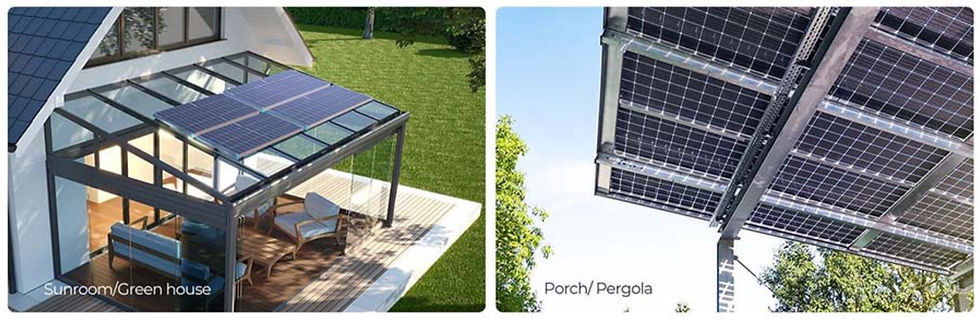
Figure 2 & 3 shows photos of solar panels in Australia.

Figure 4 shows the photo of the world's largest bifacial solar project connected as part of a 100 MW installation in Golmud in China´s western province of Qinghai.
References:
Renogy marketing team, team, R. marketing and team, R. marketing (2023) Bifacial Solar Panels Australia: Complete Guide for beginner, Renogy Australia. Available at: https://au.renogy.com/blog/bifacial-solar-panels-australia-complete-guide-for-beginner/
Enkhardt, S. (2020) AGRIVOLTAIC project with vertically mounted bifacial panels goes online in Germany, pv magazine International. Available at: https://www.pv-magazine.com/2020/10/08/agrivoltaic-project-with-vertically-mounted-bifacial-panels-goes-online-in-germany/
Admin. (2023, June 26). Bifacial Solar Panels: What are They and How Do They Work? Deege Solar. https://www.deegesolar.co.uk/bifacial_solar_panels/
David, L. (2024, July 19). A guide to bifacial solar panels (2024). https://www.marketwatch.com/guides/solar/bifacial-solar-panels/
Untapped potential: double-sided solar panels offer more energy on residential roofs | ANU Institute for Climate, Energy & Disaster Solutions. (n.d.). https://iceds.anu.edu.au/research/research-stories/untapped-potential-double-sided-solar-panels-offer-more-energy-residential
Bifacial solar panels: Everything you need to know. (n.d.). Renogy United States. https://www.renogy.com/blog/bifacial-solar-panels-disadvantages-and-advantages/
Admin. (2023, October 19). What Is the Difference between Monofacial and Bifacial Solar Panels? https://www.mbt-energy.com/news/industry/2207151.html


Comments