

PHYSICS BEHIND BADMINTON SMASHES

Written by Jaclyn Chua, Iman Aisyah
Goal Behind a Smash
A smash is a shot hit with power and speed downward to the opponent’s court. The aim is to hit the shuttlecock over the net at such a fast and furious speed that the other player or pair cannot hit it back properly before it hits the floor.
How Does it Work Exactly?
1. Speed and Velocity
Just like all the other sports, speed and velocity are crucial to produce a smash where shuttlecock will go over the net incredibly fast and requires a quick response from the player to win a point.
Speed = distance traveled in a certain amount of time.
Velocity = speed of an object in one direction.
2. Inertia
The shuttlecock maintains its motion throughout its flight until it is hit by the racket, which changes its path. This behavior is due to inertia, as described by Newton’s First Law of Motion. According to this law, an object will remain in its state of motion (or rest) unless acted upon by an external force that causes a change in its motion.

Figure 1 above shows an illustration of a badminton racket about to hit a shuttlecock from shuttlestock.
When the shuttlecock is traveling towards you, it slows down slightly due to air resistance.
When your racket makes contact with the shuttlecock, there is a friction between the racket’s strings and the shuttlecock. This frictional force allows the shuttlecock to grip the strings slightly, enabling you to control the shot.
3. Force and Energy
When you smash the shuttlecock, you are applying a force to it. According to Newton’s Second Law of Motion (F=ma), the greater the force applied, the greater the acceleration of the shuttlecock provided the mass of the shuttlecock is constant. This increased acceleration causes the shuttlecock to travel faster. The kinetic energy imparted to the shuttlecock increases with this velocity.
5. Momentum
Initially, the shuttlecock has momentum directed towards you.When you smash the shuttlecock, you apply a force to it over a short period of time. This force changes the shuttlecock’s momentum. According to Newton’s Second Law of Motion, this change in momentum which is also known as impulse, results from the force applied during the impact.
Impulse, Ft=p, where F is the force applied, t is the time duration of the impact, and Δp is the change in momentum.
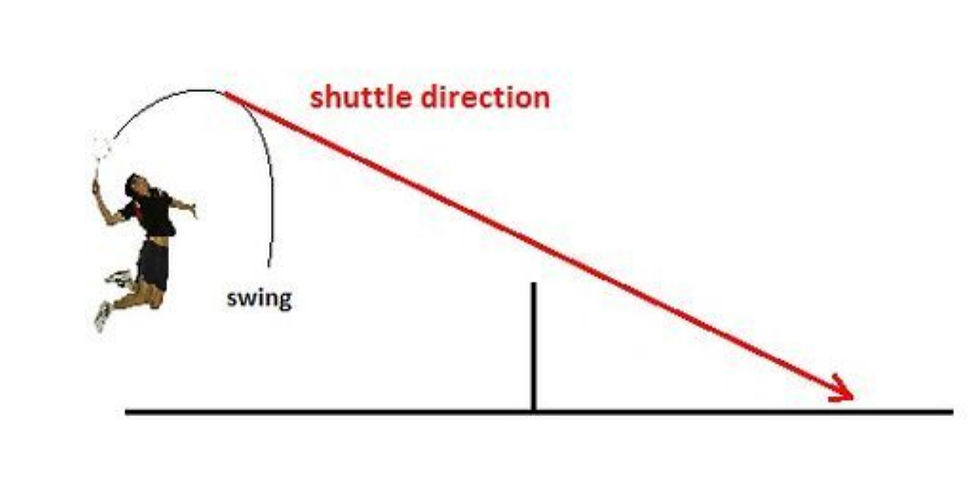
Figure 2 shows an image of a backswing smash from how-to-play-badminton.com
After the smash, the direction of the shuttlecock's momentum is reversed, and its magnitude is significantly increased due to the high velocity imparted by the smash. The change in momentum directly causes the shuttlecock to change its direction.
A smash sends the shuttlecock on a steep, downward trajectory. Gravity is the force that pulls the shuttlecock downward, contributing to its downward motion after the smash.
References:
Physics in badminton. (n.d.). Adobe Spark. https://express.adobe.com/page/YhwdOQtJ7aL4G/
Fast & Furious: The Science behind Badminton Smashes – USC Viterbi School of Engineering. (2013, December 11). https://illumin.usc.edu/fast-furious-the-science-behind-badminton-smashes/
Prezi, J. B. O. (2017, May 19). The Biomechanics of a badminton smash. prezi.com. https://prezi.com/wxgahkwcixan/the-biomechanics-of-a-badminton-smash/


Comments